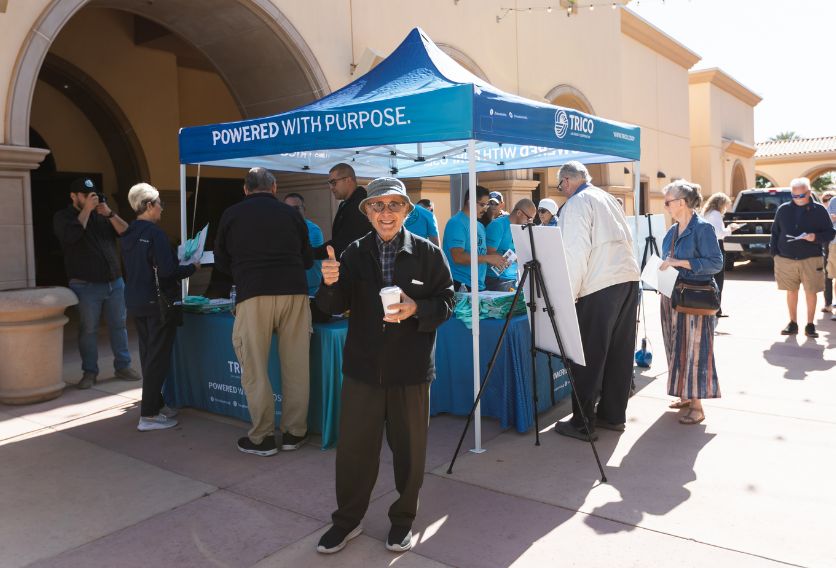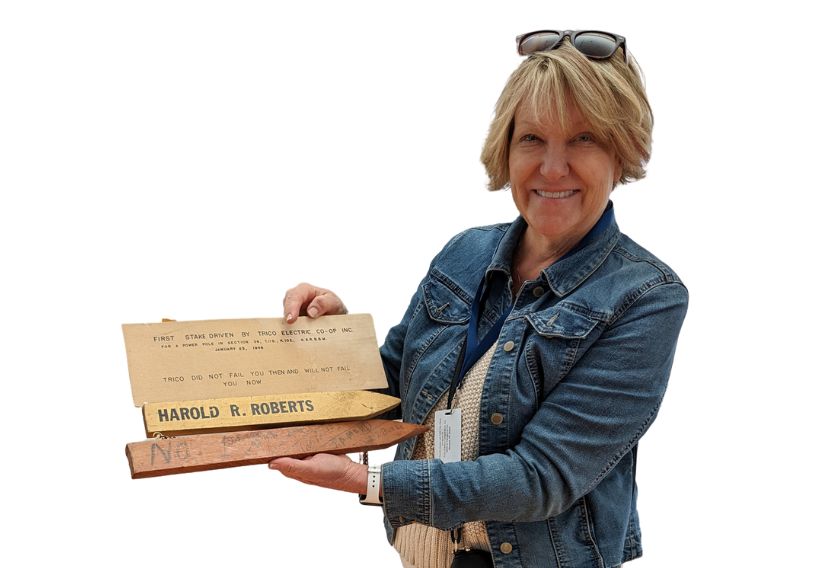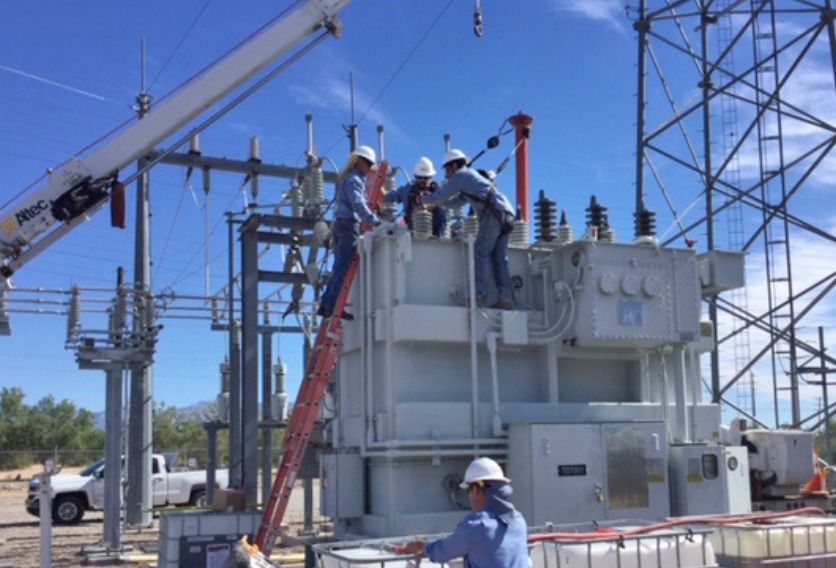

In 1945, farmers in Avra Valley came together to bring electric power to their rural area because they had the simple but brilliant idea that if the state wasn’t going to help their rural community gain better electricity, then why not just do it themselves. The idea of Trico Electric Cooperative was born. For 80 years and counting, Trico has been dedicated to making a difference in the communities we serve by providing our Members with cost-effective and sustainable energy solutions.
Trico’s first power lines were constructed in 1947 and covered 138 miles in the Marana and Avra Valley areas. The late Marana Mayor Ed Honea wasn’t born at the time but before his passing he remembers stories from his parents and grandparents telling him how they got electricity in their homes. “When my grandparents in the 1930s moved here, they didn’t have electrical power in their house, so they had to go back and retrofit the house, poke holes in the walls, run wires through them, and put in plug-ins,” he said. “People don’t realize how important co-ops were to the growth of rural America.” He recalled that Trico events were central gathering points that brought rural neighbors together, which always led to a fun time.
Former Trico Board Director Barbara Stockwell expressed how beneficial and important Trico was to her. “Trico is really, really special to me because I was in Arivaca before there was electricity,” she said. She recalls how gas stations used generators but did not have electricity. She left Arivaca for a while, and when she moved back after getting married, she remembers how excited and happy she was that the town now had electricity. “Even after two years, it still had that glow; it felt so special,” Barbara said.
Trico Board Member David Proctor is also the Vice President of BKW Farms, which has been a Trico Member since 1951. David provided information on how Trico has benefited BKW Farms by saying, “Farming is very energy intensive, and anything you can do to make that energy be used in a more renewable and sustainable way is the direction we want to go, and Trico helps us do that.” One example of how renewable and sustainable energy benefits farms is the long process BKW Farms went through to grow mushrooms in Arizona’s intense desert heat. Proctor explains that maintaining the ideal conditions – 70 degrees with 95% humidity – was a challenge, but once they succeeded, it was incredibly rewarding. The entire operation is powered by solar energy, and water is reused and recycled, making it one of the most sustainable farming practices they’ve implemented to date.
At Trico, the promise we make to our Members and community is that we can accomplish more together than we can by ourselves. As a non-profit electric cooperative, our mission is to provide safe, reliable, and affordable power while strengthening the communities we serve. We remain committed to that mission by working hand in hand with our Members to build a stronger, more sustainable future.