
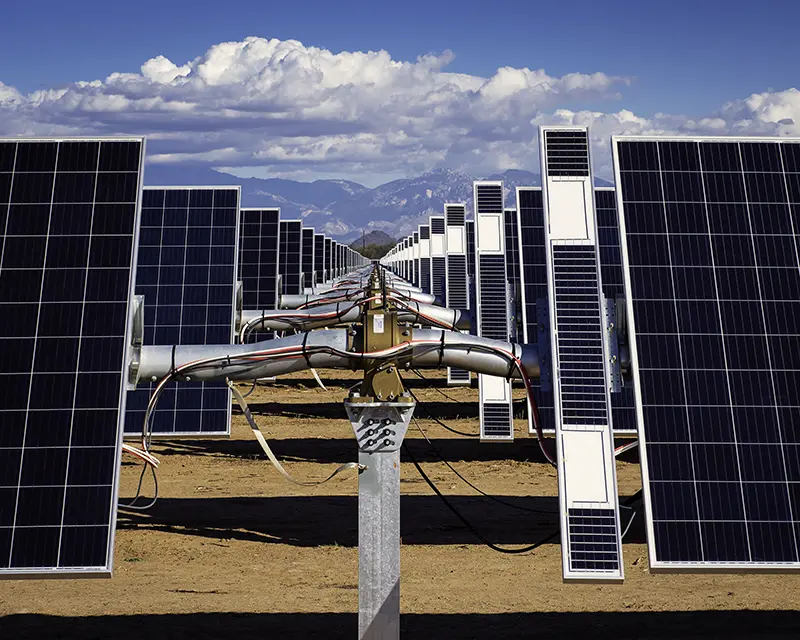
Solar Powered
Sustainable Solutions
Trico understands there are many things to keep in mind when considering installing a solar system for your home or business. We’re here to help!
See our resources below to ensure that the system you are considering can qualify and serve your needs, before signing a contract.
Rate Calculator
is solar right for you?

Thinking of installing solar, but want to know what it will cost? See if solar is right for you by using our Rate Calculator Tool in SmartHub. Log into your account and follow these steps:
- Select “Usage” from the Left Menu, then “Usage Management.”
- Select “Trico Electric Rate Calculator.”
- Click on the calculator image and follow instructions from there.
Member Solar Rate Options
RENEWABLE ENERGY BOOST RATE
Trico’s voluntary Renewable Energy Boost Rate is for Members interested in an inexpensive and flexible renewable energy option. Members on this rate pay an extra $0.01 per kWh to roundup from the amount of renewables on Trico’s system (35%) to cover 50% or 100% of your usage. Trico will purchase and retire Renewable Energy Credits (RECs) from the West to account for the difference.
You need to be enrolled in SmartHub to apply for the Renewable Energy Boost Rate. To learn more, visit our SmartHub page here.
COMMUNITY SOLAR RATE
Trico’s voluntary Community Solar Rate is for Members who want to invest in their local community and sustainable energy. Members on this rate can purchase 100% of their power from Trico’s Avion or Chirreon Solar & Battery Energy Storage Facilities for about an additional $0.025 per kWh.
You need to be enrolled in SmartHub to apply for the Community Solar Rate. To learn more, visit our SmartHub page here.
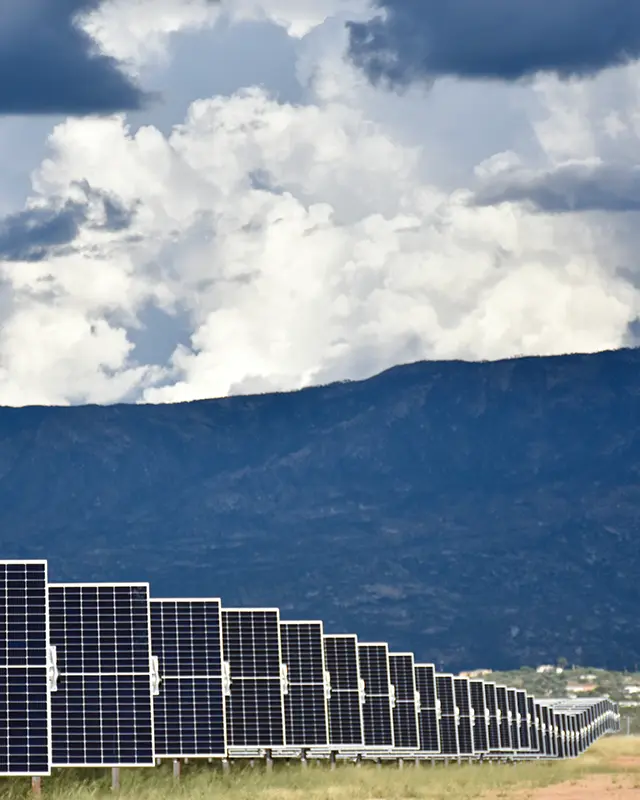
Member Install
Resources & Info
Trico has significant demand for renewable resources with over 5,000 rooftop solar photovoltaic (PV) and 211 solar water heating systems installed.
Members with solar receive a credit towards their bill for the energy their systems provide to Trico. Trico can assist all customers with the interconnection of Photovoltaic (PV) systems on their homes or businesses to encourage the installation of qualifying solar PV systems.
Take the time to read through our helpful links and guidelines below.
To find a licensed solar installer please refer to the AZROC Website.
Member Solar FAQs
will i still have a utility bill with trico?
A member whose photovoltaic system generates more energy than he/she consumes during a given billing period and does not need to purchase any kWh form Trico will always pay a minimum bill of approximately $25. This includes fixed fees associated with being interconnected to the grid, surcharge(s), and taxes.
The only additional fee the member will incur, once interconnected, is a $3.38 administrative charge which covers the Monthly Data Cost for both meters that are on the service.
Can you recommend a contractor?
No, Trico does not recommend any one contractor over another. All solar interconnections are completed by a third-party contractor of the Member’s choosing. You may also self-install, but you must have a licensed electrician complete the final interconnection.
The contractor is required to have an active license within the state of Arizona. You can access the Arizona Registrar of Contractors https://roc.force.com/AZRoc/s/contractor-search to begin a contractor search. This website is provided solely for the convenience our members. Trico does not recommend or endorse any of the listed contractors. You can choose any licensed contractor you wish. Additionally, we recommend that all interested Members contact at least three licensed and bonded contractors before deciding on a renewable energy generation system. We also recommend that you complete a background check of the contractor to ensure a reputable review of their services.
can you recommend a system size?
No, we cannot make a recommendation. You will need to discuss these issues with a licensed contractor. We recommend you contact at least three licensed and bonded contractors before deciding on a renewable energy generation system.
what type of photovoltaic systems are available?
1) Off‐Grid system:
An off‐grid system has its own complete, self‐contained power generation station. It is independent of Trico’s distribution lines (the “grid”), and all power needed by the home is produced on‐site using solar energy. A typical off‐grid system will have a solar array, a battery bank, an inverter, and several other components needed for system control, monitoring and safety.
2) Grid‐Tied System with Battery Backup:
Grid‐tied homes with battery backup are connected to Trico’s distribution lines. This allows the home or business to utilize and/or store the electrical energy the system is generating. During an outage, this system automatically switches to the backup battery power. When the utility power is restored, the system automatically switches back to using a combination of solar and utility power.
3) Grid‐tied System without Battery Backup:
Grid‐tied systems without battery backup are connected to Trico’s distribution lines. This allows the home or business to utilize both renewable energy (solar) and Trico’s electricity. These systems are the most economical and popular because they eliminate the expense and maintenance of storage batteries. A grid‐tied system is designed to meet the electrical needs of the member’s load first by the PV system. If the PV system is unable to meet the electrical needs of the home, the utility will supply the difference. At times when the PV system is generating more energy than what is being consumed by the member, the excess energy is delivered back onto Trico’s distribution lines.
Is there an application to install solar?
All solar applications are submitted through Trico’s online application portal, PowerClerk. There is no application fee. Courtesy emails will be provided throughout the application process to assist in tracking the status of the application.
do you offer net metering?
The Net Metering Tariff has been frozen for residential applications received after end of business on February 24, 2017. The DG Energy Export Tariff for the applicable year is the active tariff for residential services.
when there is an outage, what happens to solar?
When there is a Trico outage, the photovoltaic system will shut down automatically. This is a safety feature that is required to avoid danger to personnel working on the distribution lines. Without a battery backup system, the house will be without electricity, and it is not possible to use the electricity from the photovoltaic system until the outage has been restored.
does trico recommend plug-in solar systems?
Trico has reviewed plug‑in solar products and their safety features, and we do not recommend them for our members. Although some models include built‑in transfer switches, they often lack the full protections and safeguards found in properly interconnected solar systems, which can create safety risks for both your home and the electric grid.
Additionally, plug‑in solar systems do not meet Trico’s current interconnection requirements, which further limits their suitability and safety for use within Trico’s system.
Plug‑in units also provide very limited backup capability and are not designed to support essential household loads during an outage. For Members seeking true backup power, a traditional generator or a fully interconnected solar‑plus‑storage system is typically safer, more reliable, and more effective.
While plug‑in solar may seem inexpensive upfront, their limited performance and shorter lifespan can make them more costly over time compared to standard interconnected options.
If you’re considering solar or backup power, we’re here to help you evaluate the safest and most cost‑effective solutions for your home.
Member Solar Resources
Reference Guide
Things to Consider
Before signing any agreement, you should take the time to read the fine print thoroughly, get the responses back in writing and ask questions. Some questions you may want to ask:
- How much will this system cost over the life of the lease or purchase? Are there any interest or fees to be paid? What are total number of payments and due dates?
- Who has the tax obligations, including the increase in property values?
- Are there any eligible tax incentives and rebates? Who will be getting them?
- Can the warranty or maintenance obligations be sold or transferred to? If so, how?
- Who do I contact in the event of a system malfunction?
- What happens if I sell my home? What happens to the lease?
- What statistics are you using for the projection of future electric rates?
- What is the minimum performance guarantee for the system?
- Will I be compensated if the system does not produce as much power as promised?
- What are my fixed monthly fees to the utility?
Before agreeing to install a PV system at your home, you should review all of the requirements of Arizona Revised Statutes Sections 44-1761 through 44-1764. Trico requires all solar Interconnection Applications received on or after January 1, 2016 to be compliant with all requirements set forth in Arizona Revised Statutes Sections 44-1761 through 44-1764.
If you feel you have been the victim of consumer fraud, contact the Arizona Attorney General’s Tucson office at 520-628-6504, you can also file complaints online at azag.gov.
How to Read a Meter
System Size Qualification Form
Requirements
Installation & interconnection

The following documents were prepared to aid you in obtaining:
- Electric Service
- Installer Approval
- Interconnecting Approval with Distributed Generation (i.e. solar or backup generator) to Trico’s electric distribution system.
Installer Requirements & Resources
installer packet & application
INTERCONNECTION REQUIREMENTS & MANUAL
electric service requirements
training presentation
Your Bill Explained
A Quick Walkthrough
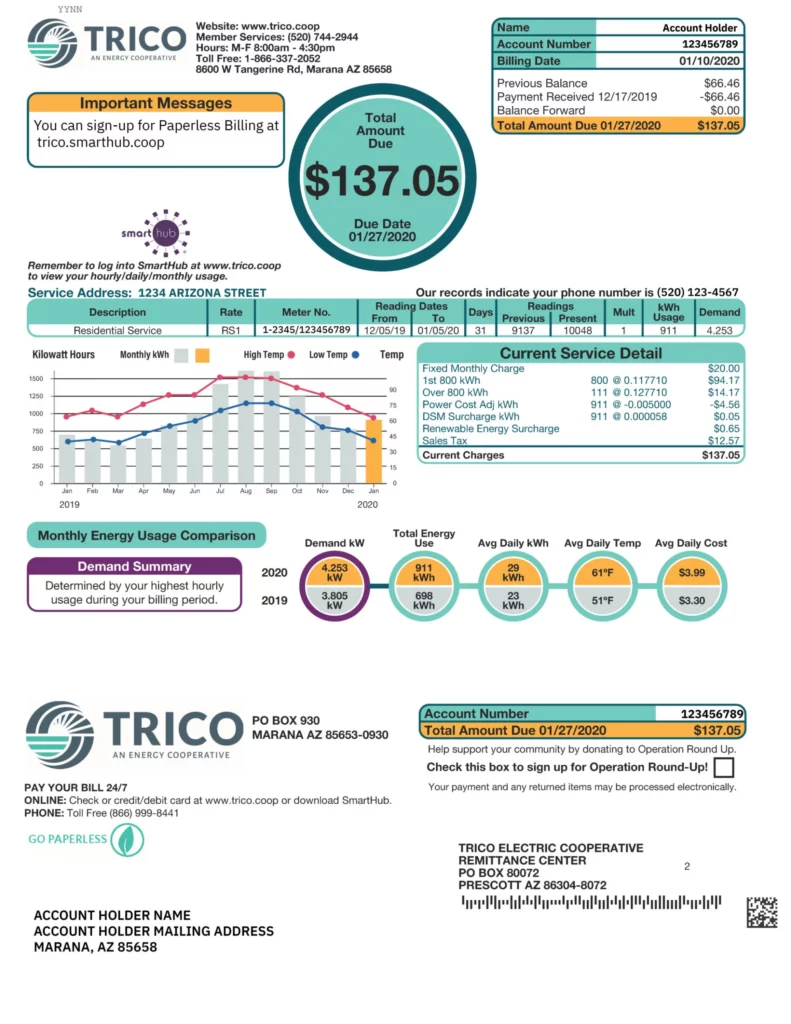
At Trico, transparency is important to us and we want our Members to fully understand the charges outlined on their bill.
View example bills and learn more below.
Trico's Renewables
Our Portfolio
Trico is committed to providing our Members environmentally conscious and economically feasible energy alternatives. As a result, Trico has a robust renewable program and a portfolio of almost 50 megawatts (MW) of connected renewable generation capacity, providing a significant portion of Trico’s peak load requirements of approximately 230MW. Trico’s renewable portfolio includes community scale renewable resources and retail renewable programs.
Trico's Solar Projects
- 227kW ac fixed panel solar PV system
- Built in 2011
- Funded by Member subscriptions and grant funding from the U.S. Department of Energy's American Recovery and Reinvestment Act
- Located at Trico headquarters in Marana
SunWatts Sun Farm
- 20MW ac single axis tracking solar PV system
- Built in 2017
- Joint project with other electric co-ops in Arizona
- Trico has 25% allocation equaling 5MW AC
Apache Solar
- 10MW ac single axis tracking solar PV system
- 15MW ac battery storage system
- Built in 2018 with partners Torch Clean Energy and Farm Credit Leasing
- Located in Marana
Avion Solar
- 10MW ac single axis tracking solar PV system
- 15MW ac battery storage system
- Built in 2022 with partners Torch Clean Energy, SOLV Energy, and Farm Credit Leasing
- Located near Saddlebrooke
Chirreon Solar
Trico's Energy Mix
Sustainable Solutions
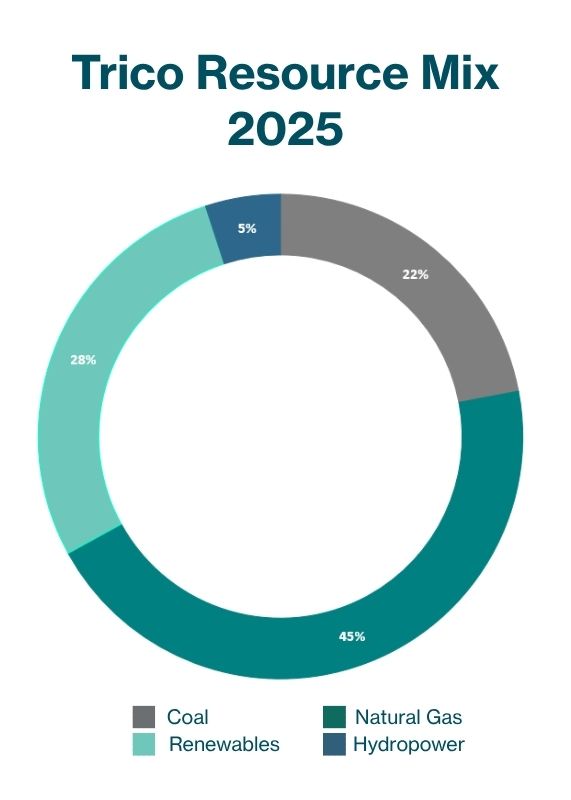
The chart here reflects Trico’s current energy mix. Energy from coal has reduced from 75% in 2010 to 28% in 2024, while energy from renewable resources has increased from less than 1% in 2010 to 35% in 2024. It is part of Trico’s mission to provide our Members with sustainable energy solutions, with a goal of reducing our carbon footprint by 50% by 2032.