
Electrical Safety
our members protected

The electricity that powers our lives has become so commonplace that people sometimes forget the importance of using it safely. That’s why we want to share our knowledge with these tools and tips to reduce preventable accidents and help keep every Member safe in and around their homes.
If you are currently in a medical emergency please call 911.
If you need Trico’s expertise and assistance call now:
The Outage Center
Be in the Know
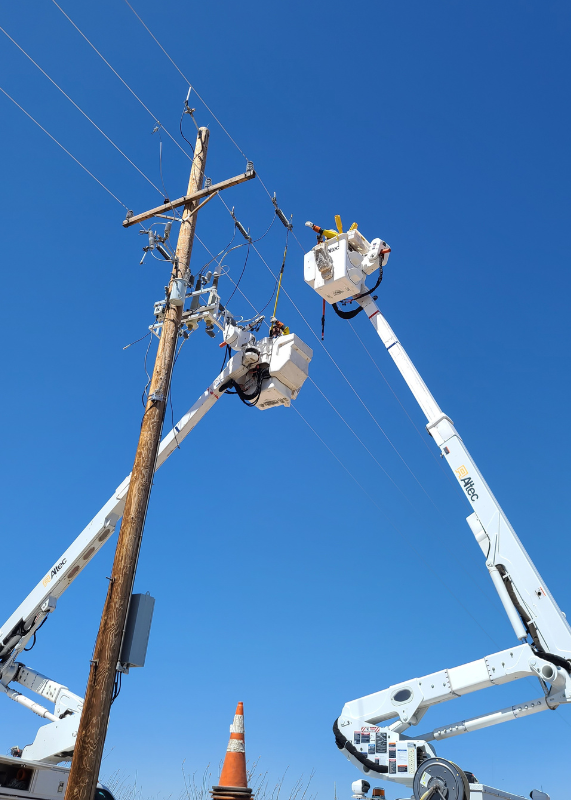
A great way to be safe is to view Trico’s Outage Center.
Here you can:
- Check out our 24/7 outage map
- Report outages
- Sign up for live updates
- Learn about Trico’s Outage Restoration Process
- Read about what to do during an outage
overhead Protection
Contractor information

Before the first boom is lifted or the first spade of dirt is moved, it is imperative to consider if any electrical safety precautions are needed. Call Trico before any construction work is performed at a work site that may involve Trico facilities or equipment.
Trico may implement preventative measures that can help protect against injury and preserve the integrity of Trico’s electrical equipment that serves our community.
Calling Trico before you begin any construction can help prevent unintended outages, injury, property damage and potential liability.
Always assume that all Trico power lines are energized unless Trico confirms that the power lines have been and continues to be de-energized and visibly grounded at the worksite.
Overhead protection contractor info
overhead powerline safety
Download our Overhead Power Line Safety Essentials.
minimum overhead approach distances
Minimum Approach Distances (for non-qualified electrical workers, people, materials, and non-crane or derrick equipment):
- Up to 50K volts: minimum approach distance of 10 feet
- 50,001 – 200K volts: minimum approach distance of 15 feet
minimum cranes & Derricks distances
Determine if any part of the equipment, load line or load (including rigging and lifting accessories), if operated up to the equipment’s maximum working radius in the work zone could get closer than:
- 20 feet for lines up to 350,000 volts
- 50 feet for lines over 350,000 volts
If so, Trico will need to be contacted.
In addition to the minimum approach distances, review the following guidelines on when to contact Trico under the OSHA Rule:
- If the work zone defined by OSHA involving a crane or derrick is greater than 20 ft. away from Trico overhead facilities for voltages from 50 V-350 kV, or greater than 50 ft. for voltages above 350 kV, then no additional actions are needed from the utility.
- If the work zone defined by OSHA involving a crane or derrick is less than 20 ft. away from Trico overhead facilities for voltages from 50 V-350 kV, or less than 50 ft. for voltages above 350 kV, but does not violate OSHA’s minimum approach distance, then the requestor should contact Trico. We will review the plan and determine if actions are needed from the utility.
- If the work zone defined by OSHA involving a crane or derrick will violate OSHA’s minimum approach distance, then requestor should contact Trico.
overhead forbidden zone
View a diagram illustrating the Overhead Forbidden Zone here.
The minimum approach distance can be described as the radius of a circle centered on the overhead conductor or wire. No person, equipment or material should violate this radius. A violation may result in equipment damage or severe injury or death.
Applicants should contact Trico with any questions or concerns regarding overhead protection, or to arrange for overhead protection measures.
steps to take
1. Complete the online application which includes submitting a work plan description and sketch of the work site. You will need to generate a sketch to upload with the completed form. View a sample overhead sketch.

Once we receive your application, a Trico representative will attempt to contact you within approximately one business day to schedule an on-site meeting.
2. Once contact is made, our Trico representative will arrange to meet with you at the work site within five business days. At this initial on-site meeting, the Trico representative will identify applicable conductor heights and voltages, review the scope of the proposed work and discuss safe practices to use near Trico equipment. At this meeting, the applicant and the Trico representative will determine if work can safely proceed as described in the submitted work plan or if an alternative plan or safety measures are necessary.
3. If the applicant determines that work can be performed without violating minimum approach distances, then the applicant can proceed once a mutually agreeable work plan has been signed by both Trico and the applicant. The applicant must agree to follow OSHA regulation 1926.1408.
In situations where Trico line crews have completed grounding or temporary relocation of equipment, a Trico representative will conduct a detailed “protection briefing” meeting with the applicant that includes information about equipment that is grounded, locations where equipment remains energized, and working rules around Trico equipment.
Once Trico and the applicant have agreed upon a work plan, schedule, and the overhead safety measures that have been implemented, both parties will sign the protection briefing, and the applicant will be allowed to proceed with its work.
Trico recognizes that work conditions can change during the construction phase of a project. If such changing conditions potentially affect Trico equipment and/or associated safety measures taken, work at a job site should stop until these conditions have been reevaluated by a Trico representative.
It is important for Trico and the applicant to maintain clear, ongoing communications at all times while work is being conducted in the vicinity of Trico equipment. In emergency situations, Trico reserves the right to stop overhead protection at any time, including by re-energizing one or more lines, to maintain system reliability. In this case, a Trico representative will notify the applicant that the line(s) will be re-energized and the applicant’s work will have to wait until Trico reinstates the overhead protection.
4. On job sites where additional safety measures are implemented, the applicant should contact Trico for removal of such additional safety measures when the applicant’s work has been completed.
Online application
Complete the online application here which includes submitting a work plan description and sketch of the work site. You will need to generate a sketch to upload with the completed form. View a sample overhead sketch here.
Safety EVENTS
Safety At Its Finest
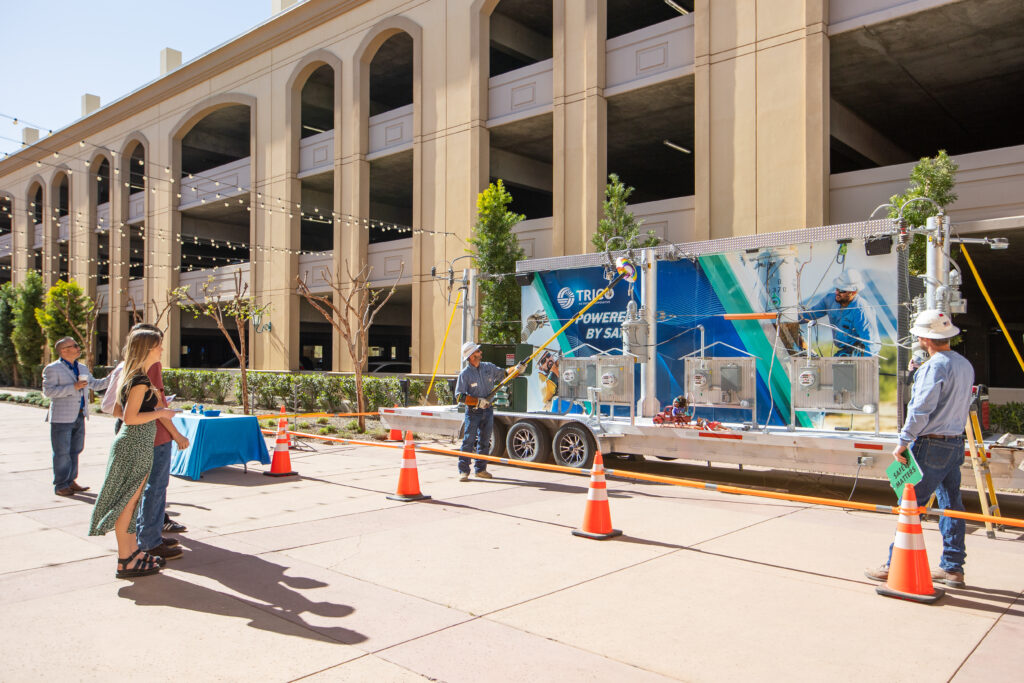
Trico’s Linemen can attend events including school career days, school STEM nights, and other community events. Some of the electrical safety demonstrations they can offer include:
- Linemen duties demonstration with bucket truck
- Safety trailer demonstration
Schedule an electrical safety demonstration for your event using the form below.
Safety Tips & Tricks
Powered By Touchstone
Electricity is a powerful resource and is the backbone of our daily lives. We rely on it and we never forget: safety is a top priority. The best way to prevent accidents is to review safety steps regularly.
That’s why our friends at Touchstone Energy have put together a collection of helpful and informative safety videos to help prepare our Members for anything.
Know Your Home
Safety Checklist

The vast majority of electrical accidents can be prevented if people understand the dangers and steps they can take to be safe around electricity, especially in the home.
That’s why we wanted to provide our members with the Home Electrical Safety Checklist so you can make sure your home is as safe as possible.
Electrical Safety Resources
Call 811 Before You Dig
Contact Arizona 811 from anywhere in Arizona at least two full working days prior to digging. Call 811 and you’ll be connected with the Arizona 811 Center. Tell the Locate Specialist where you plan to dig and what type of work you’re doing, and the affected local utility companies will be notified. They’ll send a locator to mark the underground lines, pipes and cables at your dig site so you’ll know what’s below – and be able to dig safely. You can also make your 811 ticket request online using E-Stake.
Outage tips & recommendations
See our list of outage tips and recommendations here.